AI Strategy Roadmap Options for Small Businesses
Compare AI strategy roadmap options for small businesses, from a free growth plan to outside advice and hands-on implementation. Choose a path that fits your work.

An AI strategy roadmap turns AI ideas into a plan tied to work your business needs done. The hard part is choosing a starting point that won’t leave you with another tool to manage. Here are five ways to build that plan, based on how much time, advice, and hands-on help you want.
1. Huge AI
Huge AI helps owner-operators find work AI can take on, then build and operate systems that handle it. It’s for business owners who are short on time and want a plan connected to their day-to-day work, not a list of apps to research.
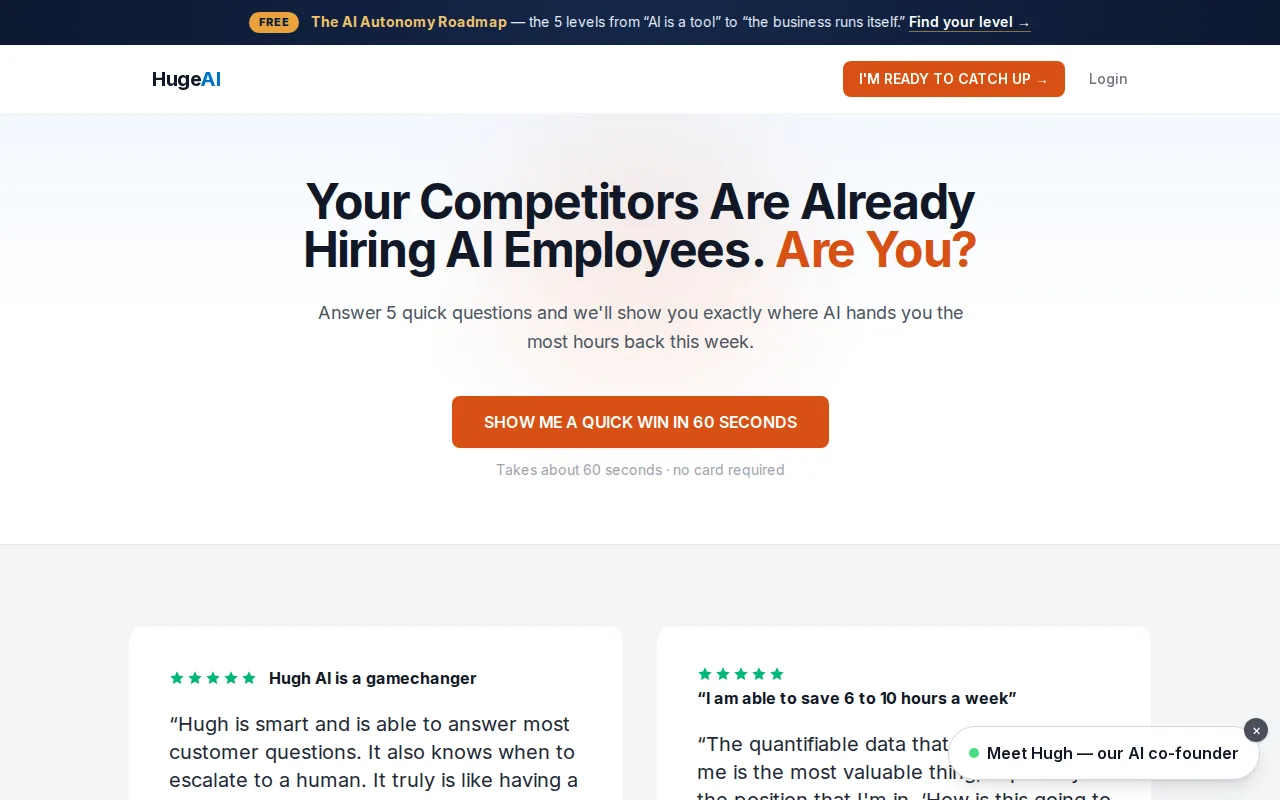
The free AI Growth Roadmap starts with a 45-minute slot. Huge AI maps how your business actually runs and sends a same-day report with three to seven prioritized fixes. The report includes estimated dollar and hour impact for each fix, so you can compare the proposed work before spending money on a build.
The roadmap is a low-risk first step before you spend a dime building anything. Huge AI also describes a five-hour-per-week time-saving guarantee. Treat that as a benchmark to discuss against your own workload, not a promise that every task or business will produce the same result.
The service path can move from a plan you implement yourself, to working sessions where Huge AI builds alongside you, to done-for-you AI Employees managed by the team. An AI employee can be trained on the business and set up for a defined role, such as responding to leads or handling follow-up. The owner approves scenarios before it goes live.
That distinction matters. A system that replies to a new inquiry is different from one that makes a coverage decision or handles a complaint. Set clear boundaries around what it can do, when a person must review the work, and how the system should stop when a request falls outside its rules.
For an owner who wants to grow without adding another daily task, the appeal is that Huge AI builds and operates the AI for you. Start with the roadmap, review the proposed time and dollar impact, then decide whether to move forward. Grab a 45-minute slot before committing to a build.
2. An Owner-Led AI Roadmap
An owner-led roadmap is a plan the business owner shapes and carries out with the people who do the work. It suits a small team with a clear pain point, someone who can set aside time to examine the process, and a low-risk first task to test.
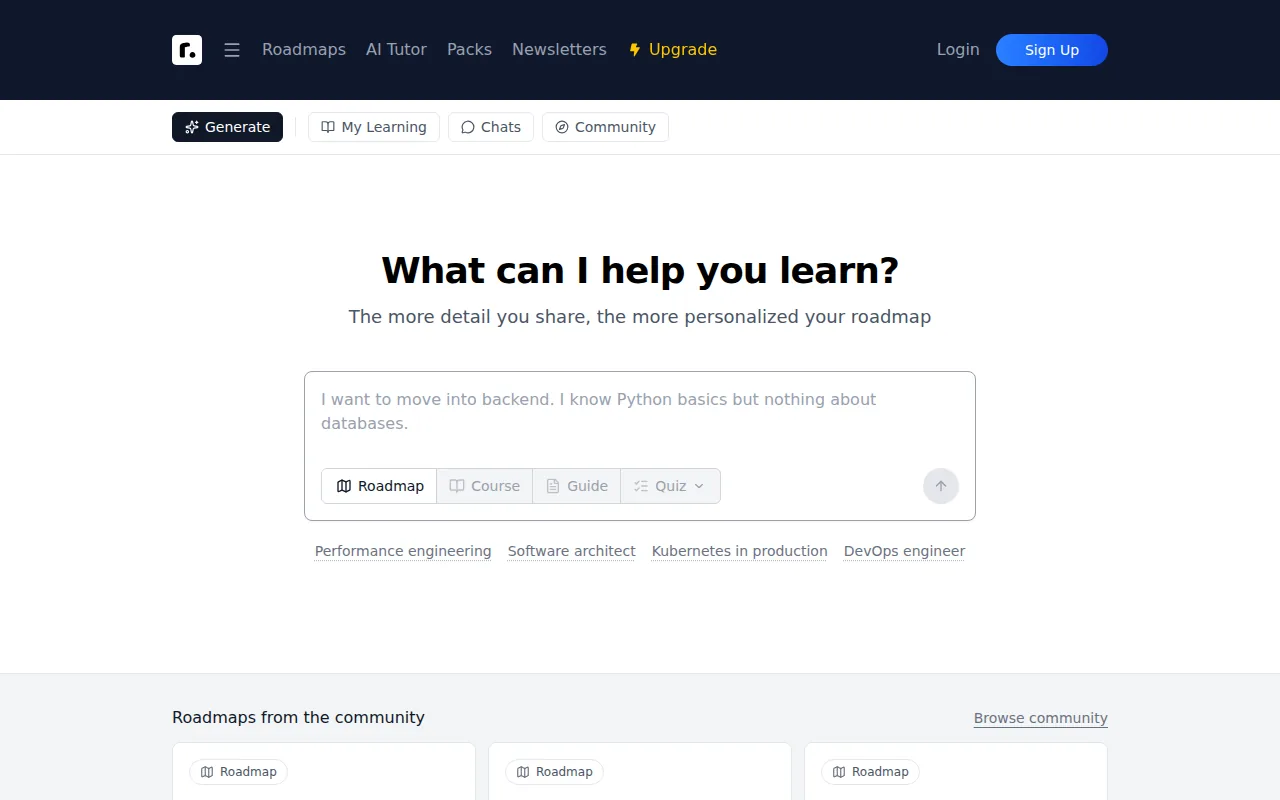
Begin with one workflow that repeats often. In an insurance agency, that might be routine renewal reminders or sorting incoming certificate requests. At a plumbing shop, it could be capturing details from a web inquiry before a dispatcher takes over. Write down what starts the process, who handles it now, and what a correct finish looks like.
Then measure the current work. Track how often it happens and how much staff time it takes. Note delays, rework, and cases that need judgment. Those details help separate a task that is simply repetitive from one that looks repetitive but depends on client context or an experienced employee’s call.
A useful AI strategy roadmap should connect each proposed project to a business goal. If the goal is to respond to leads sooner, track time to first response and qualified appointments. If it’s to cut admin time, track staff handling time and the hours needed to review AI output. The aim is to see whether the work changed, not whether a new tool was switched on. For a local service business, a related goal is being named when customers ask an AI assistant for a provider nearby; this overview of AI search optimization for home service businesses compares the main options.
Make the first test narrow. A system might draft an email for staff review rather than send it on its own. Or it might sort a document into a queue while an employee confirms the category. Once the normal cases work, document the exceptions. Then decide whether the next step is more automation, a human approval point, or leaving the process alone.
People doing the work should help define the rules. They know which details change the outcome and where a handoff tends to fail. Explain what the system is meant to handle and what stays with a person. This helps staff raise concerns early, before an incorrect response reaches a customer.
A self-directed plan can keep costs and scope in your control, but it asks the owner to lead discovery, testing, and follow-through. If you’re still unsure which workflows are ready, an AI readiness assessment for small businesses can help frame the questions around process fit and likely value.
For owners who want a first pass without an outside team, this route can be enough. Keep the first project small and set a review date before expanding it.
3. An Independent AI Strategy Consultant
An independent AI strategy consultant helps assess business needs and shape a plan without taking over daily operations. This route fits an owner who wants outside advice before choosing an implementation partner, or who needs an informed second opinion on a project already under way.
A useful engagement should start with business processes, not a pitch for a particular tool. Ask the consultant to map the work, identify where decisions depend on human judgment, and explain what information a proposed AI system would need. For an insurance agency, that includes a careful look at client data and the difference between administrative support and advice that could affect coverage.
Ask for clear outputs. These may include a ranked set of use cases, a phased plan, a rough view of required staff time, and the points where a person should review or stop an AI workflow. A recommendation is more useful when it says what the system should do in a normal case and what it must do when the input is incomplete or unusual.
Also ask how the plan will address accuracy. Generative AI can produce a confident answer that is wrong. For client-facing work, require checks against approved business information and set a path to a staff member when the system cannot answer with confidence. Explainability matters too: staff should be able to see what information shaped a response or decision well enough to review it.
A small business can manage AI risks by naming them, assigning an owner, deciding how to check them, and agreeing on when to pause the system. A large governance office is not required to take these practical steps.
For regulated work, bring compliance questions into planning rather than leaving them until launch. In an independent insurance agency, that means considering privacy, record handling, and E&O exposure. Keep a qualified person responsible for decisions that affect coverage or client advice.
An outside consultant can provide structure, but the owner still has to make choices and ensure the plan fits the team’s capacity. Agree on who owns each action after the assessment. If no one has time to carry out the recommendations, a detailed report may sit untouched.
Choose this route when the main need is independent planning advice. If you already know the workflow and need it built, an implementation partner may be a closer fit.
4. An Automation Implementation Partner
An automation implementation partner takes a defined business process and builds a working system around it. This option fits owners who can name the task they want handled but don’t want to design and maintain the workflow themselves.
Start by agreeing on the process boundary. For example, a lead response workflow might begin when a web form arrives and end when the inquiry is booked for a staff callback. Decide what information is required, which system holds it, and what the AI may say. A clear boundary helps prevent the project from quietly expanding into unrelated tasks.
Before work begins, ask for a plain-language process map. It should show the trigger, the information the system reads, the action it takes, and the point where a person reviews or takes over. For a service business, an exception might be an urgent request, a complaint, or a message that mentions a safety issue. Those cases should reach a person, not follow the normal automated path.
Testing should use examples that look like actual work. Include incomplete forms, duplicate requests, unclear messages, and cases where the customer changes their mind. Decide who checks the results and how often. If the system produces a wrong answer, the business needs a way to correct the source or rule instead of asking staff to quietly work around the mistake.
The partner should also explain what happens after launch. AI systems need someone to monitor the work, review exceptions, and update instructions when business processes change. Agree on an owner for each part of that work. A setup that nobody checks can drift away from the way the team operates.
For a small business, choosing one measurable workflow is usually easier to manage than starting several at once. The AI implementation strategy for small businesses covers how to select a workflow, protect client data, and measure results as the work grows.
Huge AI’s done-for-you path is one way to move from a roadmap into built and managed AI. The key question for any partner is whether the proposed system handles a real workload and who stays accountable when it needs a human decision.
5. A Software-Vendor-Led Roadmap
A software-vendor-led roadmap uses AI features within a system your business already relies on. It’s a fit when the job is contained inside one product, such as drafting a message in a customer system or sorting records in an existing workflow.
This route can reduce the need to connect separate services, but don’t assume a built-in AI feature fits your process just because it appears in the menu. Ask what information it uses, where its output goes, and whether staff can review or correct the result. Confirm how it handles client data and what your agreement says about that data.
Before enabling a feature, test it with routine examples and edge cases. In an agency, a draft renewal email might be useful if an employee checks policy details before it goes out. A system that infers a coverage answer from incomplete records needs a much tighter boundary. Keep the human approval point where an error could harm a client or expose the business to risk.
Set a simple measure before the test. Count the time spent on the task now, including review and corrections. Then compare the same work after the feature is in use. If the AI saves drafting time but adds more checking time, the total result may not help your team.
A vendor-led path can be a sensible first test, but it may only address work inside that one system. If the delay happens across phone calls, email, scheduling, and follow-up, a broader roadmap may reveal the actual bottleneck.
The AI Autonomy Roadmap describes stages of AI use, from help with individual tasks to systems that manage workflows with human review at key points. That can help an owner name the level of control they want before deciding whether a built-in feature is enough.
Use the vendor’s roadmap when your need sits inside one product and the team already knows who will review its output. If the task crosses several systems or needs ongoing operation, compare it with the other routes above.
AI Strategy Roadmap Options Compared
The right route depends on what you need after identifying a possible use case. Use this table to compare who carries the work and what to check before you commit.
| Option | Who carries the work | Useful when | Check before moving ahead |
|---|---|---|---|
| Huge AI | Huge AI maps the work and can build and operate AI | You want a roadmap plus a path to done-for-you support | Review the proposed fixes, ROI estimates, and human review points |
| Owner-led roadmap | The owner and team | You can lead a small first test | Confirm who will measure and maintain the workflow |
| Independent consultant | Consultant advises; your team acts on the plan | You want outside planning advice | Agree on outputs and who owns each next action |
| Implementation partner | Partner builds; your business sets rules and oversight | You have a defined process ready to build | Set boundaries, exception handling, and ongoing ownership |
| Software-vendor-led plan | Your team uses features within an existing system | The task fits within one product | Check data handling, review controls, and task-level results |
No option removes the need for a business owner to set limits. The difference is who helps map the work and who handles build and upkeep. If you want to avoid another tool to operate, favor a route that names ongoing responsibility up front.
Buyer’s Checklist: Match the Roadmap to Your Workload
Before choosing a path, make sure the plan starts with a real business task. A roadmap that begins with a tool can miss the reason work is piling up in the first place.
- Name the business outcome. Do you need to return owner time, respond to leads sooner, or reduce repeated data entry?
- Describe one workflow. Write what starts it, what staff do, and what counts as a finished task.
- Set a baseline. Track task volume and handling time. Include review time and rework.
- Mark judgment points. Decide which cases need a staff member because they involve advice, a complaint, a dispute, or unusual facts.
- Assign an owner. Name the person responsible for checking results and acting on errors.
- Set a stop rule. Define when the system should pause and hand work to a person.
- Pick a review date. Compare the same measures after launch before widening the system’s role.
For regulated work, add a data check before any client records enter a system. Limit access to the information needed for the task. Keep records of who approves messages or decisions that could affect a client. Risk-management guidance can be a useful reminder to assign oversight as well as test performance.
People need time to adjust, too. Explain which tasks AI may take on and which decisions remain with staff. Invite the person doing the work to flag errors and awkward cases. Their feedback can reveal a missing rule before it becomes a customer problem.
Keep the roadmap phased. First, assess readiness and choose one task. Then test it with human review. If results meet the target and controls hold, decide whether to expand. If the workflow keeps producing exceptions, revise the design or choose a different task.
A short checklist can guide an owner-led test, but it won’t replace hands-on work when the process crosses systems or requires ongoing maintenance. Match the support to the workload, not to the number of AI features a vendor can show you.
FAQ
What is an AI strategy roadmap?
An AI strategy roadmap is a plan for using AI to support defined business goals. It connects a task to an expected outcome, sets priorities, and explains how the work will be tested and overseen. For a small business, that can mean choosing one repeat task first, naming a human reviewer, and tracking whether the change saves time or improves service.
Where should a small business start with AI?
Start with a frequent task that has clear steps and a result you can check. Measure how much time it takes now, including review and rework. Then decide which cases AI can handle and which should go to a person. A free AI Growth Roadmap from Huge AI is one way to review possible workflows before paying for a build.
Does a small business need an AI consultant?
No, a consultant isn’t required for every first test. An owner and team can assess a narrow workflow if they have time to document it, set safeguards, and review results. Outside advice can help when the use case is unclear, the process crosses systems, or client data and compliance concerns need careful planning.
How do you measure whether an AI roadmap is working?
Choose measures tied to the task before launch. Track the time staff spend handling and reviewing it, the volume completed, and errors or rework. Add one business outcome, such as qualified appointments for lead follow-up. Compare the same measures after the test, then decide whether to keep, revise, or expand the workflow.
How should an insurance agency handle AI risks?
An insurance agency should keep qualified staff responsible for coverage advice and other decisions that affect clients. Limit the data a system can access, test its responses against approved information, and route complaints or unusual requests to a person. Review applicable privacy rules, E&O exposure, and insurance guidance before putting a workflow into client use.
Conclusion
Choose the option that matches how much planning and implementation help you need. If you want to see which tasks could save time before committing to a build, start with Huge AI’s free 45-minute Growth Roadmap and review the same-day plan against your actual workload.
Want an AI employee that answers every lead instantly?
That's what we build at Huge AI. One flat plan, no fine print.
See pricing →