AI Call Answering Service Options for SMBs
Compare AI call answering service options for SMBs, including done-for-you support, virtual receptionists, appointment setting, and live-agent backup.

Missed calls cost more than time. They can mean a lost estimate, a late insurance renewal, or an emergency job sent to another company. But many services marketed as fully automated still depend on live agents for hard calls.
We’ve narrowed the field into six workable options. Huge AI comes first for owners who want the system built and operated for them, not another tool to manage.
1. Huge AI
Huge AI builds and runs AI employees that can handle front-line call work for small and midsize businesses. It fits owner-operators who are drowning in admin or want to grow without adding another full-time role.
We start by mapping how your business actually runs. That means looking at the calls that come in, the questions staff answer, the jobs that need urgent routing, and the points where leads fall through.
Then we decide what AI can run safely. A call answering workflow might capture a new lead, ask about the service area, collect the job details, book a consultation, or route an urgent issue to the right person.
The work can also fit insurance agencies. An AI employee can support intake for certificate requests, renewal questions, policy service needs, or appointment requests. Sensitive decisions still need human review. The goal is to remove repeat admin, not hand off professional judgment.
Huge AI works through a simple ladder. The free AI Growth Roadmap starts with a 45-minute slot. You receive a same-day report with 3 to 7 fixes ranked by estimated dollar and hour impact. From there, the work can move to an AI Concierge model or a fully done-for-you AI Employee that Huge AI builds and operates.
That operating model matters. A tool may give you a dashboard and ask you to write scripts, test flows, fix errors, and review transcripts. Huge AI takes responsibility for the system component by component. The stated target is a 5+ hrs/week guarantee where the workflow qualifies.
The limitation is fit. Huge AI is not a simple app you switch on for a generic script. The best result comes when the business has a clear workflow and can explain what should happen after each call type.
Before you spend a dime building anything, use the free roadmap to find the call tasks with the clearest payback. A 45-minute slot can show whether phone handling is the right first project or whether follow-up, scheduling, or insurance admin should come first.
2. AI Voice Agents, Immediate Answers Without Adding Staff
An AI voice agent answers calls through natural conversation instead of a fixed phone tree. It suits service businesses that need coverage during busy periods, evenings, or weekends without hiring another receptionist.

The strongest use case is a structured call. The agent can answer approved questions, gather caller details, qualify a lead, and move the person toward a next step. It can also handle many calls at once, which helps when a storm creates a sudden rush of HVAC, plumbing, or roofing calls.
Research on this category points to a gap between marketing language and actual service design. About 70% used a hybrid model with live-agent help for emergencies or complex conversations.
Hybrid support is not inherently bad. It does mean you need to ask where the human handoff happens and what it costs. A service that answers routine calls may still require a live team when the caller is upset, asks for an exception, or needs a judgment call.
Voice quality matters too. Long pauses, missed interruptions, or vague answers can make the caller lose trust. Give the system a narrow knowledge base at first. Start with approved answers, clear limits, and a defined escalation rule.
AI can work well for repeat calls, while people remain useful for sensitive or complex conversations. The distinction between an answering service and a call center depends on how calls are handled in practice. Related topics include AI and live answering models and answering services and call centers.
For a contractor, a good first flow might ask for the address, service type, urgency, and preferred time. It should then book the right appointment or send an alert. It should not promise a price or dispatch a crew unless the business rules allow that action.
The main caveat is that published time-savings data is thin. Without your own baseline, the return is still a guess.
3. Virtual Receptionists, Capture Leads and Book Calls After Hours
A virtual receptionist handles the front desk without sitting in your office. This option works for businesses that want someone, or something, to answer every call, qualify the caller, and book a consultation after hours.

Some virtual receptionist services use AI only. Others use live receptionists. A third group uses AI for the first pass and sends harder calls to a person. Do not treat the label as a promise. Ask who answers the call at 8 p.m. and what happens when the caller asks something outside the script.
For home service companies, integration is often the deciding point. When the appointment lands in the same board your dispatcher uses, the team avoids copying details from a message into another system.
A dedicated live receptionist can also make sense when the caller experience is central to the brand. A law office, insurance agency, or high-touch service may want a person who can slow down, show empathy, and handle a long intake.
The trade-off is cost control and consistency. Live coverage may be billed by minutes, calls, or staffing level. AI coverage may reduce wait time but struggle with unusual requests.
We’d use this model when the business has a steady call flow and a clear booking path. If every call needs owner judgment, start with a smaller intake workflow instead of sending the whole front desk to automation.
4. AI Appointment Setters, Turn Inbound Calls Into Scheduled Jobs
An AI appointment setter moves beyond message taking. It asks the questions needed to book a job, checks the right schedule, and sends the appointment into the dispatch or calendar system.

This is a strong fit for trades and local services. Imagine a plumbing call that comes in during dinner. The AI can ask whether water is actively leaking, collect the address, identify the job type, and route an emergency according to your rules. A routine request can go into the next available slot.
The workflow must match the business. An HVAC company may need the unit type, symptoms, and service area. A cleaning company may need the property size and visit type. An insurance agency may need the caller’s account status and the reason for the request before booking a review.
One source describes appointment setters that triage urgency and book jobs into a dispatch board. Another describes AI that captures structured data instead of leaving a loose message. That distinction is worth testing. A transcript is useful, but structured fields make the next action much clearer.
There is also a risk of overbooking. The AI needs rules for travel time, service areas, technician skills, appointment length, and emergency capacity. If those rules are missing, a successful call can still create a scheduling mess.
Use a test period with real call types. Review the booked jobs against the dispatch board. Check whether the AI asked the right questions and whether staff had to correct the record later.
For a wider look at phone intake, scheduling, integrations, and ROI, our AI phone answering service options for SMBs page covers the workflow in more detail.
5. Hybrid AI + Live Agent Services, Add Human Backup for Complex Calls
A hybrid AI and live-agent service lets AI handle routine calls while a person takes over when the situation needs judgment. It fits businesses with a mix of simple requests and sensitive conversations.

AI can collect the caller’s name, location, account details, and reason for calling. It can then send a short summary to the live agent. The caller should not have to repeat every detail just because the handoff happened.
Common escalation triggers include emergencies, upset callers, policy exceptions, complex legal intake, and medical concerns. For a plumbing company, flooding or a gas leak may need immediate routing. For an insurance agency, a coverage question may need a licensed professional rather than an automated answer.
The value of hybrid service comes from clear boundaries. The business decides what AI may answer, what it may collect, and when it must stop. A vague rule such as “send hard calls to a person” is not enough. Write down the words, situations, and account types that trigger the handoff.
One source on hybrid answering describes workflows for lead capture, scheduling, routing, dispatch intake, and customer service. It also points to transcript review and call outcomes as ways to check whether the system is doing what the business intended.
The caveat is availability. A live fallback only helps when a trained person can take the call. Ask about coverage hours, transfer failure rules, wait times, and what happens when every agent is busy.
A hybrid setup can also cost more than an AI-only system. That may be a fair trade for regulated work or high-value client conversations. It is less useful when nearly every call still ends with a human doing the full job.
6. AI Call Screening, Filter Noise and Route Genuine Opportunities
AI call screening separates spam and low-value calls from genuine leads. It suits owners who lose time to solicitations but still need to respond quickly to real prospects.
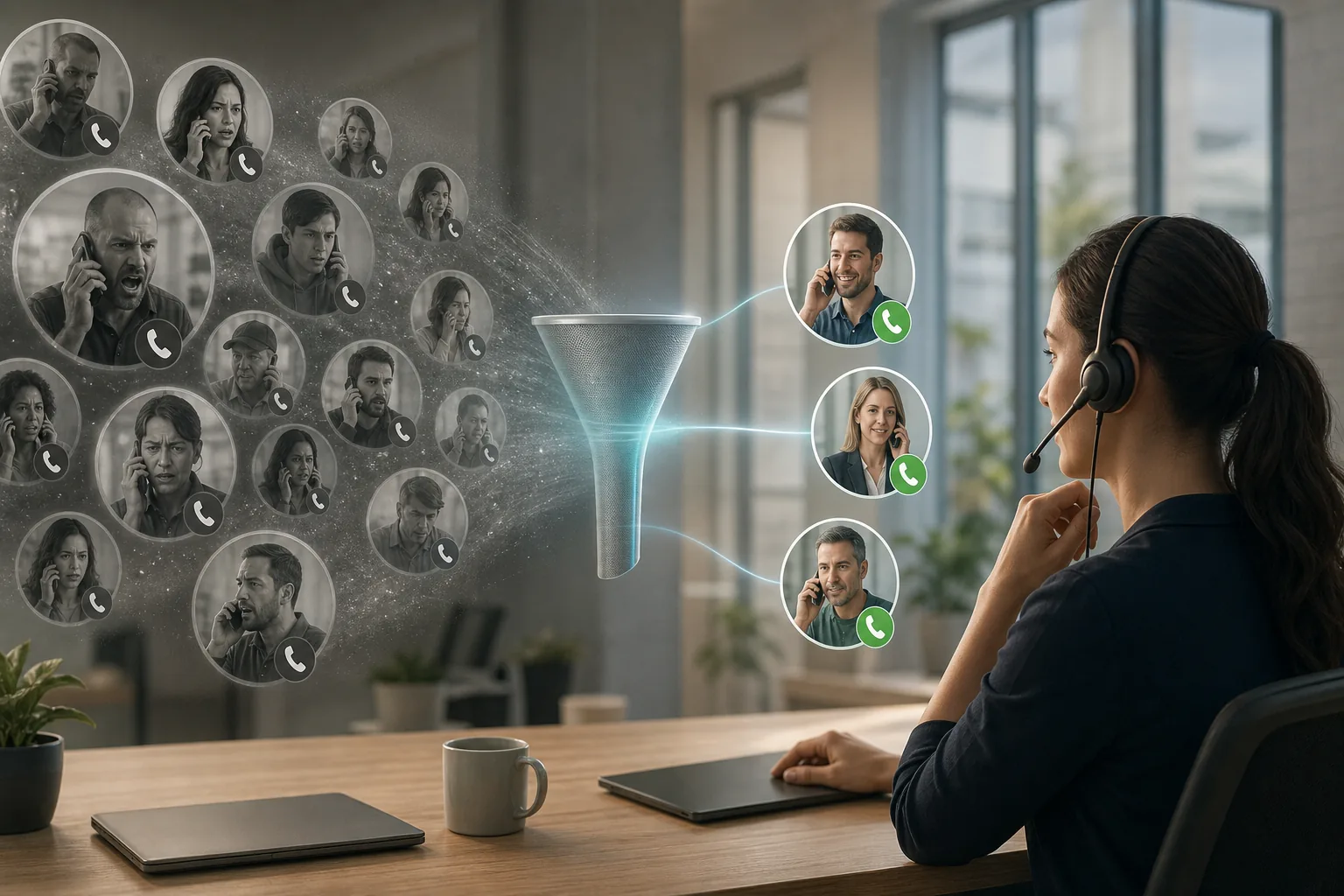
A screening workflow may ask why the caller is calling, check the service area, assess urgency, and pass qualified calls to the owner or team. It can also send a summary when a live transfer is not needed.
This is a smaller first project than a full virtual front desk. That makes it useful for a busy owner who wants to test AI without changing the whole phone system. Start with one public number or one after-hours flow.
Some call-screening systems include calendar access, live transfer, summaries, and multilingual support. One documented option supports several languages, though language coverage varies by service and plan. Confirm the exact languages before making a promise to callers.
Screening also needs a safe failure path. A genuine lead may give a short answer or sound unsure. If the rules are too strict, the system can reject good business. Let uncertain calls reach a person or create a high-priority callback task.
| Call situation | Useful AI action | Human review needed? | Main risk |
|---|---|---|---|
| Robocall or solicitation | End the call or mark it as spam | Usually no | A real caller may be misclassified |
| New service lead | Ask qualifying questions and route the lead | Often | Bad rules can filter out a good prospect |
| Urgent repair request | Identify urgency and trigger escalation | Yes | Slow routing can create service risk |
| Routine appointment | Book an approved time slot | Sometimes | Calendar rules may be incomplete |
| Upset or sensitive caller | Collect a brief summary and transfer | Yes | A poor handoff can damage trust |
Call screening is worth considering when the owner spends a large part of the day deciding which calls deserve attention. It is not a replacement for a clear service process. The filter can only follow the rules you give it.
What to Check Before Choosing an AI Call Answering Service
Start with the call types that cost the most time or revenue. Pull a sample of recent calls and mark each one as a lead, booking request, emergency, existing-customer issue, spam, or other.
Then ask each provider these questions:
- Does AI handle the call alone, or is live-agent backup part of the flow?
- What happens when the caller asks something outside the approved answers?
- Can the system book into the calendar or field-service board you already use?
- Which details become structured fields instead of loose notes?
- How are urgent calls escalated?
- Can your team review transcripts and call outcomes?
- Are calls billed by minute, call count, usage, or staffing time?
- What happens when the live team is unavailable?
It also found that 58% listed at least one limitation. Those limitations matter because a low sticker price can lose its value if staff must re-enter every booking or repair every handoff.
Build your own baseline before you buy. Track missed calls, after-hours calls, qualified leads, booked appointments, and staff time spent on phone admin for two weeks. Then use those numbers in an AI ROI calculation for hours saved and revenue recovered.
For owners who do not want to configure the system themselves, Huge AI can map the workflow and operate the finished AI employee. The free AI Growth Roadmap is the sensible first step because it puts the likely savings on paper before any build begins.
FAQ
What is an AI call answering service?
An AI call answering service uses voice AI to answer inbound calls and follow business rules. It may handle questions, lead intake, appointment booking, screening, or routing. Some services are fully AI-driven, while others send complex calls to live agents. Ask how each provider handles emergencies and requests outside its script.
Can an AI answering service book appointments?
Yes, an AI answering service can book appointments when it connects to an approved calendar or dispatch system. The workflow needs clear rules for service area, appointment length, staff availability, and urgent work. Test the booking record after each call so your team does not have to fix missing or incorrect details.
Do AI call answering services use human agents?
Many AI call answering services use human agents for complex, sensitive, or urgent calls. Live fallback can improve caller support, but it can also change the cost and the promised level of automation.
Is AI call answering safe for an insurance agency?
AI call answering can support an insurance agency with intake, scheduling, and routine service requests, but it should not make coverage decisions without proper review. Set limits around policy advice, claims questions, personal data, and escalation. Keep a licensed team member in the loop when a caller needs professional judgment.
How much time can an AI answering service save?
The amount of time saved depends on call volume and workflow design. Measure your missed calls and phone-admin hours first. Huge AI’s free AI Growth Roadmap estimates the hours and dollar impact for your specific business.
Conclusion
Choose the option that matches your call mix, not the one with the loudest automation claim. For an owner who wants a finished system without learning another app, grab a free 45-minute AI Growth Roadmap from Huge AI before spending a dime. You’ll see which call tasks belong with AI, what needs human backup, and whether the workflow can meet the 5+ hrs/week target.
Want an AI employee that answers every lead instantly?
That's what we build at Huge AI. One flat plan, no fine print.
See pricing →